A Blog Post by Coconuts Hike Japan
WHY THE FOREST FEELS DIFFERENT — AND WHY THAT MATTERS FOR YOU
Experience the transformative power of forest bathing with Coconuts Hike Japan. Our guided walks in Hakone offer a serene escape from the hustle and bustle of everyday life, allowing you to reconnect with nature and yourself.
WHAT YOUR BODY ALREADY KNOWS
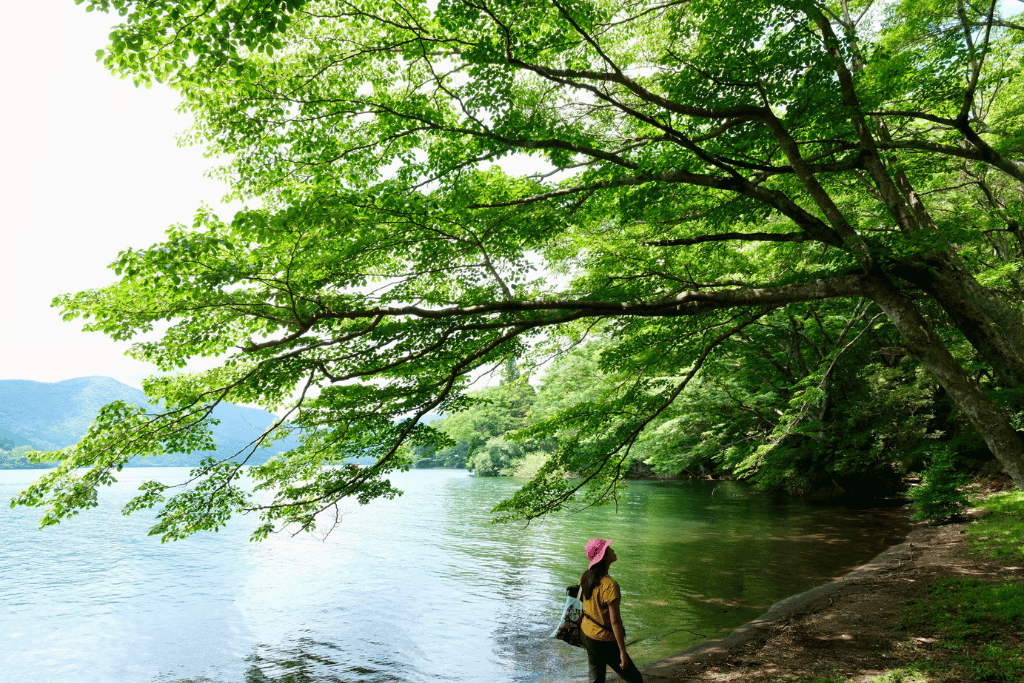
The Japanese practice of shinrin-yoku (森林浴) — literally “forest bathing” — has been studied for decades by researchers across Japan and beyond. Studies consistently show that time spent in forest environments produces measurable reductions in cortisol (the primary stress hormone), blood pressure, heart rate, and self-reported anxiety. These are not anecdotal impressions. They are data.
But why? What is it about a forest specifically that produces this response?
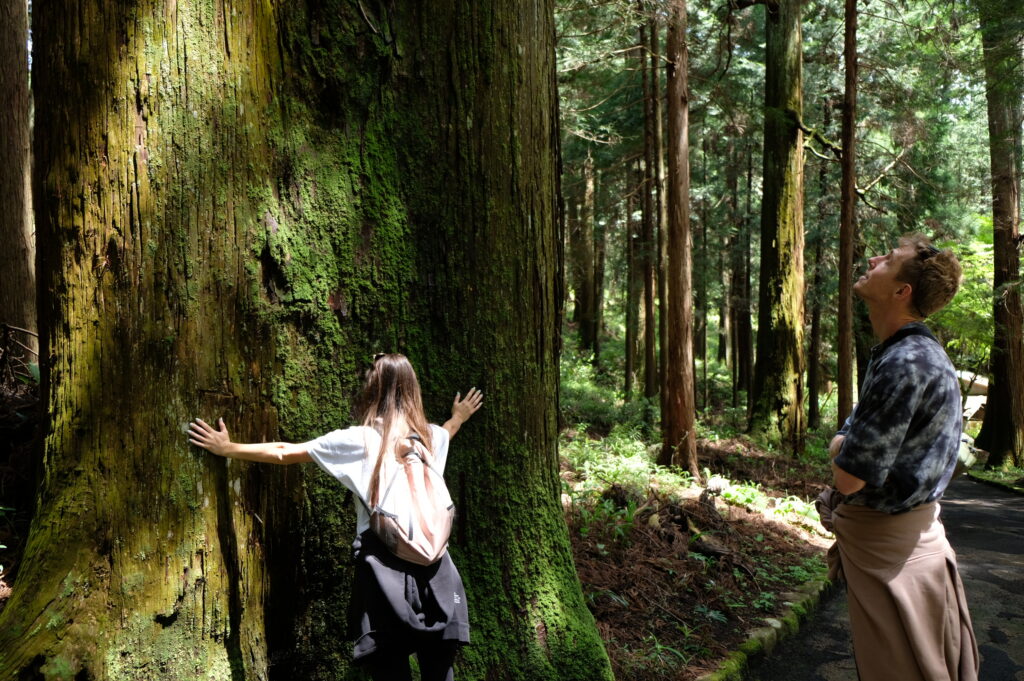
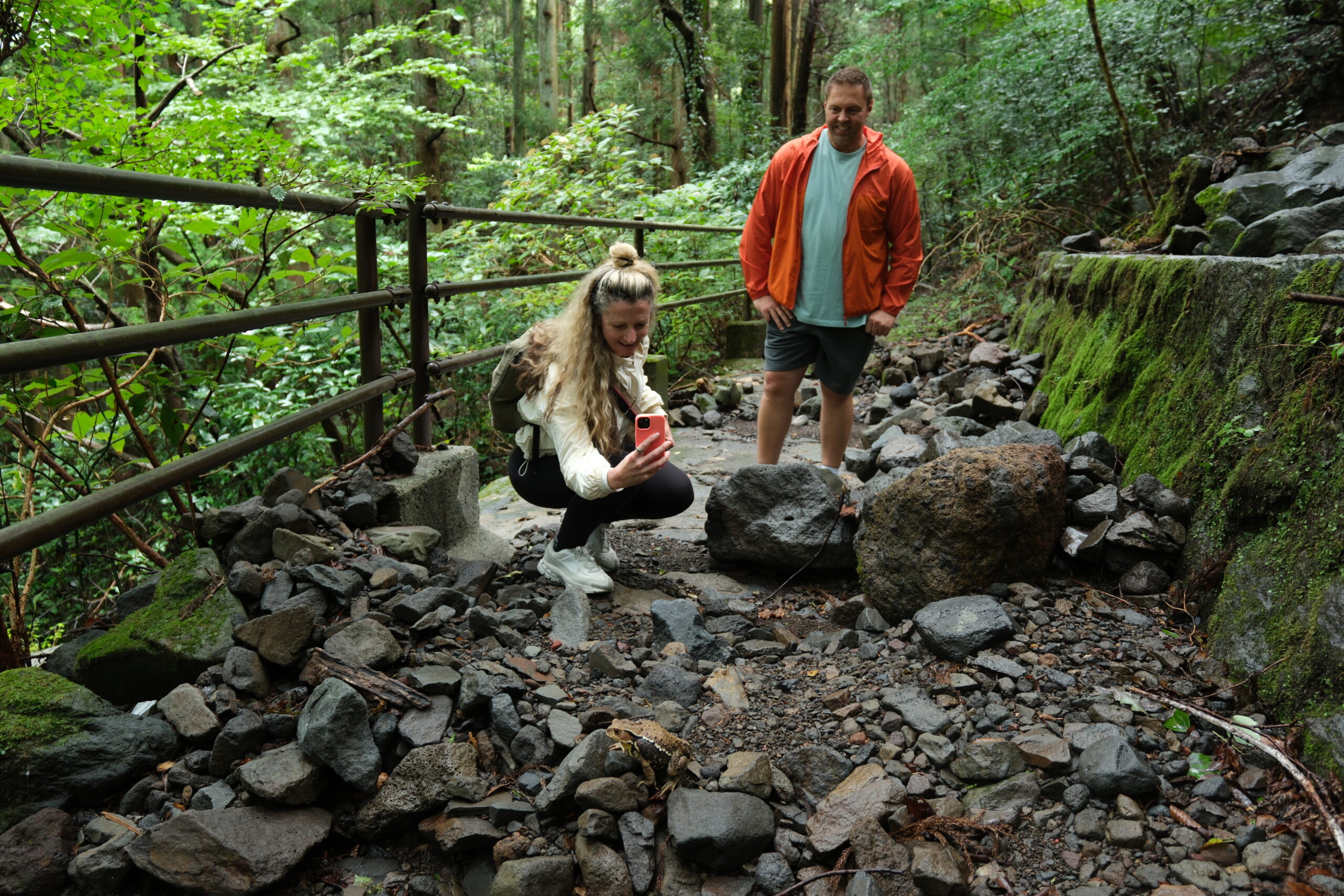
Our visit to Manza Onsen area in Gunma
THE HIDDEN RHYTHM OF THE NATURAL WORLD
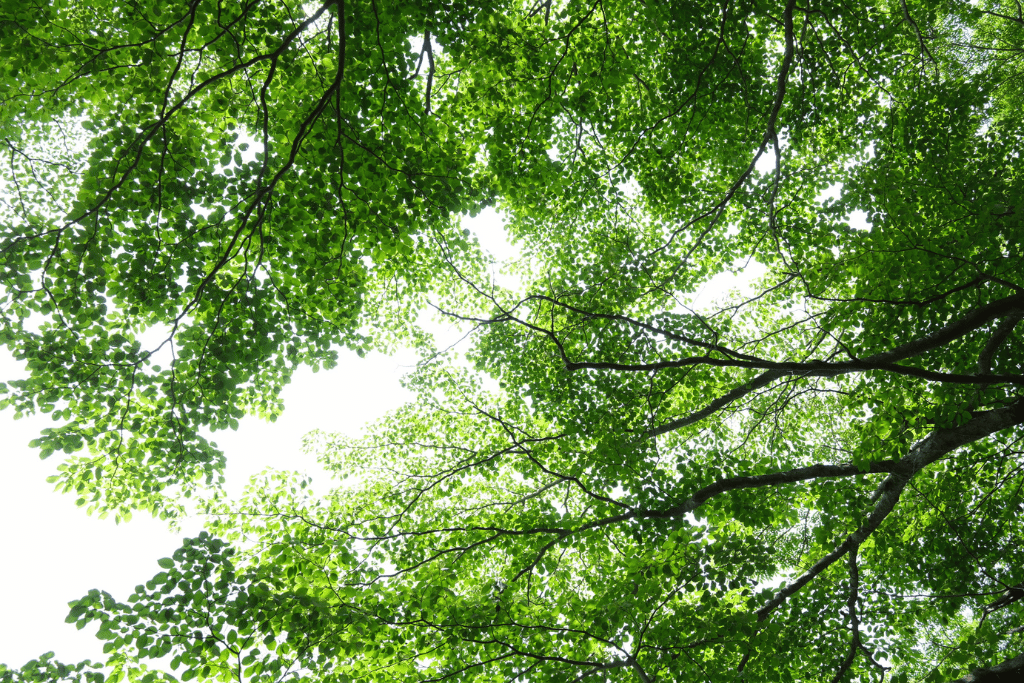
In physics, there is a phenomenon called 1/f fluctuation — pronounced “one-over-f fluctuation” and known in Japanese as yuragi (ゆらぎ), meaning a gentle wavering or oscillation. It describes a specific mathematical relationship in wave patterns: one that sits precisely between pure order and pure randomness.
Think of it this way. A metronome is perfectly regular — every beat identical, every interval the same. It is predictable, and after a while, it becomes numbing. White noise, on the other hand, is completely random — all frequencies at once, no pattern at all. It quickly becomes exhausting and unsettling.
1/f fluctuation is neither of these. It is the sweet spot between them: regular enough to feel safe and comprehensible, varied enough to remain alive and interesting. Researchers describe it as a “moderate blend of regularity and irregularity, predictability and surprise” — and the human nervous system, it appears, is deeply attuned to it.
Where does this pattern appear?
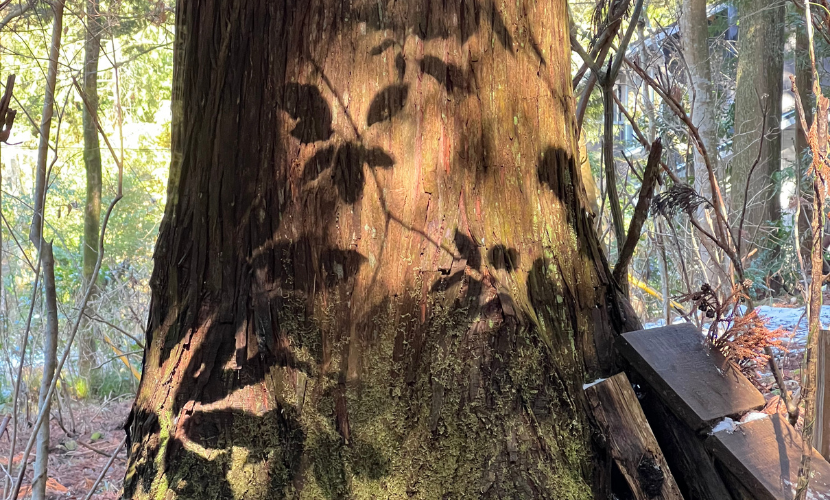
Everywhere in nature, as it turns out. The filtering of light through forest leaves — komorebi (木漏れ日), that beloved dappled sunlight — follows a 1/f pattern. So does the sound of a mountain stream: actual measurements at the Manza River found a lambda value of 0.987, almost perfectly matching the ideal. Birdsong follows it. The ripple of a pond surface follows it. Even the annual growth rings of a tree, when measured, carry this same signature rhythm.
What is especially remarkable is that 1/f fluctuation also appears within us. Our own heartbeat intervals, eye movements, and neural firing patterns follow this same gentle, irregular-yet-patterned rhythm. The forest, in other words, is speaking a language that our bodies already know.
WHAT THIS DOES TO YOUR BRAIN AND BODY
When the body perceives 1/f fluctuation through the senses — through what we see, hear, feel, and smell in a forest — a cascade of responses may follow. According to the research of Japanese physicist Toshimitsu Musha, one of the key mechanisms is the stimulation of alpha waves (α-waves) in the brain.
You may have encountered alpha waves in the context of meditation or sleep. They are associated with a state of relaxed alertness — not drowsiness, not anxiety, but the calm, open awareness that most of us find very difficult to access during a normal working day. Alpha waves are the brain’s way of saying: I am safe, I am present, I can rest.
Alongside this, exposure to natural 1/f environments is thought to help regulate the autonomic nervous system — the part of our nervous body that governs heart rate, breathing, digestion, and our stress response. When the autonomic nervous system finds balance, the physical sensations are unmistakable: deeper breathing, slower pulse, a sense of groundedness that can be difficult to explain but impossible to miss.
This is not mystical. It is physiology.
And importantly, the exhibition made a point we find deeply important: it is not the 1/f fluctuation alone that heals. Walking in a real forest means fresh air, physical movement through natural terrain, release from everyday digital demands, the quiet company of other people, and the full-body engagement of all five senses at once. The science supports and enriches our understanding — it doesn’t reduce it to a single mechanism. The forest works on you as a whole person.
What is especially remarkable is that 1/f fluctuation also appears within us. Our own heartbeat intervals, eye movements, and neural firing patterns follow this same gentle, irregular-yet-patterned rhythm. The forest, in other words, is speaking a language that our bodies already know.
THE FOREST IS DOING MORE THAN YOU REALISE
When the body perceives 1/f fluctuation through the senses — through what we see, hear, feel, and smell in a forest — a cascade of responses may follow. According to the research of Japanese physicist Toshimitsu Musha, one of the key mechanisms is the stimulation of alpha waves (α-waves) in the brain.
You may have encountered alpha waves in the context of meditation or sleep. They are associated with a state of relaxed alertness — not drowsiness, not anxiety, but the calm, open awareness that most of us find very difficult to access during a normal working day. Alpha waves are the brain’s way of saying: I am safe, I am present, I can rest.
Alongside this, exposure to natural 1/f environments is thought to help regulate the autonomic nervous system — the part of our nervous body that governs heart rate, breathing, digestion, and our stress response. When the autonomic nervous system finds balance, the physical sensations are unmistakable: deeper breathing, slower pulse, a sense of groundedness that can be difficult to explain but impossible to miss.